

On July 3rd is International Plastic Bag Free Day – a global day of action reminding us that it’s long past time to turn our backs on plastic bags. 🌊
Sounds like a harmless piece of plastic, right? A thin film that we often use for only a few minutes – and which then takes decades to degrade on its way to the ocean. Our team in Medewi, Bali, finds such bags on the beach every day. What strikes us anew each time: many of them are not even 5 years old. The animals suffer nonetheless.
https://shopify-staged-uploads.storage.googleapis.com/tmp/245956671/files/9ace9d73-21e0-426e-b203-36b306396d11/image_0.jpgWhy plastic bags are so dangerous for sea turtles
Sea turtles have a problem with plastic bags – and it’s rooted in their biology. Turtles primarily feed on jellyfish. From a turtle's perspective, a plastic bag floating in the water looks exactly like its favorite prey: transparent, gooey, soft.
The result is tragic. The bag is eaten – but not digested. It blocks the gastrointestinal tract, prevents real food intake, and the turtle literally starves with a full stomach. Researchers at the University of Exeter estimate that more than half of all sea turtles worldwide already have plastic in their bodies.
And turtles have been on Earth for over 100 million years. They have survived dinosaurs, survived ice ages – but our 40-second solution for shopping is currently causing them serious trouble.
Image credit: Photo by @dpmdiving
The numbers behind the problem
- Globally, an estimated 5 trillion plastic bags are consumed each year – that’s around 160,000 bags per second
- An average plastic bag is used for only 12–15 minutes
- After that, it takes up to 500 years to decompose
- In the ocean, plastic bags never fully decompose – they become microplastics that enter the food chain
- According to UNEP, up to 8 million tons of plastic end up in the ocean annually – a significant portion of which are single-use bags
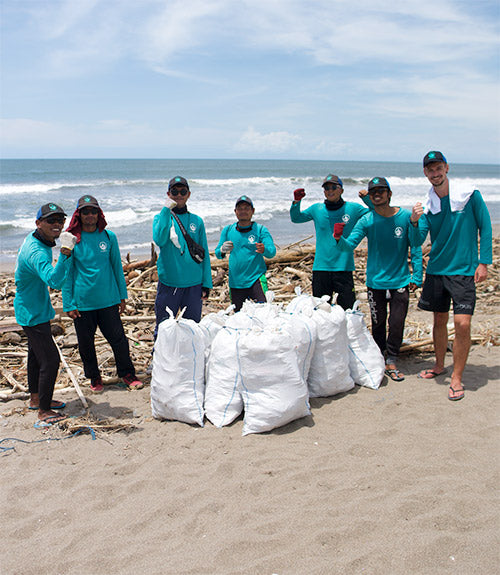
Our team in Medewi, Bali, collects up to 300 kilograms of waste daily from the beaches around the village. A shockingly large part of it: plastic bags, film, packaging remnants. Things that someone used briefly – and which then remain forever.
https://shopify-staged-uploads.storage.googleapis.com/tmp/245956671/files/37c2da10-d9cd-4f7f-9453-cf41f72604a6/image_1.jpgDominik's moment in Medewi
When Dominik founded Oceanmata in 2020 – after quitting his job as an engineer at Airbus – one of the most defining moments wasn't spectacular at all: A local employee in Bali showed him what they find on the beach every day. Plastic bags washed ashore by the sea. Some still bearing inscriptions from Europe.
"Plastic is not waste – it's a valuable raw material that we handle incorrectly," Dominik says today. This conviction is behind everything Oceanmata does. Since its founding, our 11-member team in Medewi has already removed over 150,000 kg of Ocean Plastic from the Indian Ocean – and 5% of our revenue goes directly into this work.
What you can do on July 3rd (and beyond)
International Plastic Bag Free Day is not a day for a guilty conscience. It is an invitation to change a small habit – one that makes a real difference.
- Keep a cloth bag handy – Don't leave it at home, but in your jacket, backpack, handbag. The first bag on the hook is useless.
- Buy fruit & vegetables without plastic – Unpackaged apples don't need an extra bag. A banana comes with its own packaging system.
- Ask bakeries & co. – Many bakeries still give bread in plastic. Asking costs nothing: "Can I just have it like this?"
- Use up old bags instead of throwing them away – If you still have plastic bags at home: use them as long as possible before switching to alternatives.
- Sponsor a marine animal – For birthdays, anniversaries, just because. With a marine animal sponsorship from Oceanmata, you directly support our work in Bali.
Image credit: Photo by @dpmdiving
Oceanmata and plastic: our approach
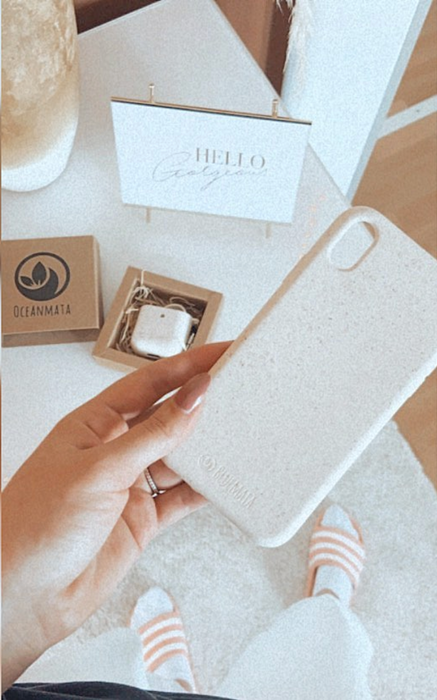
We don't believe a phone case will save the world. But we do believe that every purchasing decision is a vote – for the kind of economy we want. Our compostable phone cases are shipped in small cotton bags, without unnecessary plastic packaging waste. Our ocean plastic jewelry is made from the plastic we collect directly on the beach in Bali.
Not seeing plastic as waste – but as a raw material. That changes everything.
"The case is beautiful and I know my purchase makes a direct impact. That just feels good." – Lara H., Switzerland
Conclusion: Small day, big impact
July 3rd reminds us how much power lies in a single decision. One less bag. One more reusable bag. A sponsorship instead of a standard gift. For the turtles in Medewi, in the Maldives, in the oceans of this world – that makes a real difference.
🐢 Join in on International Plastic Bag Free Day!
Discover our marine animal sponsorships, buy a plastic-free phone case, or gift ocean plastic jewelry – and every purchase allows our team in Bali to collect even more. 🌊
Entdecke passende Oceanmata Produkte