
What if we stopped seeing plastic as waste – but as a valuable raw material? That's exactly what we do at Oceanmata every day. At our recycling station in Medewi, Bali, we transform ocean plastic into new products. And today, we're taking you along – step by step through our complete ocean plastic recycling process. 🔄
Step 1: Collection – Every Piece Counts 🌊
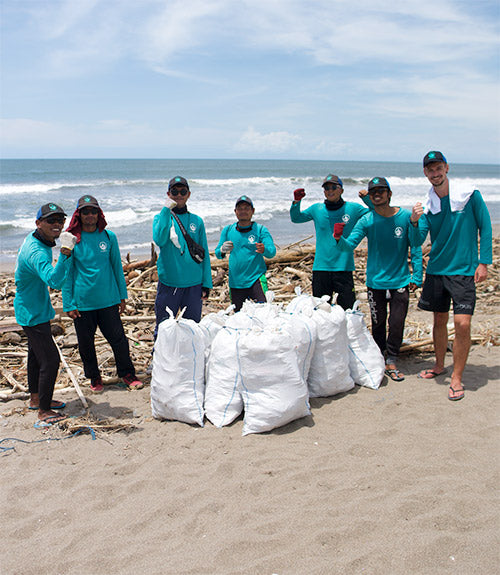
It all starts on the beach. Our 11-person team in Medewi organizes regular beach clean-ups, where every plastic bottle, every straw, and every bag is collected. But we don't just collect on beaches – river barriers also intercept plastic before it even reaches the ocean.
The special thing: Every collection is weighed and photographed. With our Plastic Tracker, we transparently document how much plastic we remove from the ocean. This way, as part of our community of over 165,000 ocean heroes, you can precisely track what your contribution achieves.
You can learn more about Medewi as a plastic hotspot and why we work there in our article about Medewi.
Step 2: Sorting – Not All Plastic Is Created Equal
This is where it gets really exciting (and yes, a bit nerdy too). Because not all plastic is the same. Our team sorts the collected material according to three criteria:
- Type of plastic: HDPE (hard plastic like bottle caps), LDPE (films and bags), PP (packaging), and PS (styrofoam)
- Color: White, transparent, colorful, black – each color has its area of application
- Condition: How weathered is the material? Is it still recyclable?
This meticulous sorting is the key to high-quality recycling. Because if different types of plastic are mixed, the quality of the end product suffers enormously. Our team has developed real expertise here over the years. 💪
Step 3: Shredding, Melting, Pellets – The Transformation
Now comes the magic. The sorted plastic is fed into our Precious Plastic machines – an open-source recycling system developed by the global Precious Plastic Community.
The process runs in three phases:
- Shredding: The plastic is broken down into small flakes
- Melting: The flakes are heated and melted into a homogeneous mass
- Pelletizing: The mass is formed into uniform pellets – the raw material for new products
Our machines process 5 kg per hour – that may not sound like much, but at full operation, we reach up to 50 kg of recycled plastic per day. And every kilogram processed this way is one kilogram less in the ocean.
Step 4: New Products – From Waste to Must-Have
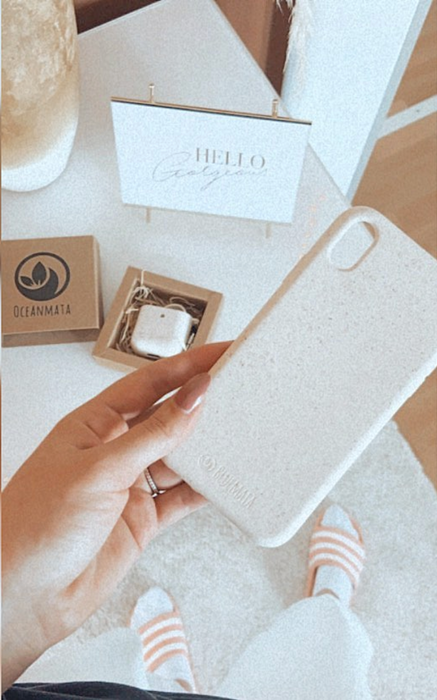
From the pellets, completely different things emerge: recycled bracelets that you wear as a statement on your wrist, plates for various applications, and high-quality granulate used in the production of sustainable phone cases.
The principle behind it: For every Oceanmata product, 1 kg of plastic is removed from the ocean. This is how the cycle closes – and you are right in the middle of it.
What Cannot Be Recycled
We want to be honest with you: Not all plastic we collect can be recycled. Some materials are too weathered, contaminated, or consist of mixed plastics that cannot be cleanly separated.
This non-recyclable material goes to the Klungkung facility – a professional disposal facility in Bali. This ensures that this plastic also does not end up back in the ocean. Transparency is important to us – even if it means sharing uncomfortable truths. You can find more about this in our article about the plastic truth in Bali.
The Numbers Speak for Themselves 📊
Let's pause briefly and let the facts sink in:
- 300,000+ kg of ocean plastic collected – and it's growing daily
- 50 kg/day maximum recycling capacity in Medewi
- 11 employees in the Medewi team, working hard every day
- 165,000+ ocean heroes in our community
- 4 types of plastic (HDPE, LDPE, PP, PS) are processed
These numbers are not marketing – they are the result of hard, daily work. And with every new member of our community, they continue to grow. 🌊
Become Part of the Cycle 🔄
Every Product = 1 kg Less Plastic in the Ocean
Do you want to support the recycling cycle with your next purchase? Check out our collection – every product has a mission.
Entdecke passende Oceanmata Produkte