



Turquoise waters, white beaches – and plastic as far as the eye can see
Bali. The name alone conjures images of endless rice terraces, surfers at sunset, and coconuts on the beach. Every year, millions of travelers flock to the Island of the Gods to experience this very paradise. And yes – Bali is incredibly beautiful. 🌊
But there's another side to it. A side you don't see on Instagram feeds. A side that personally shocked me so much that it changed my entire life.
I'm Dominik, founder of Oceanmata. In 2020, I traveled to Bali to learn surfing. What I found instead was a beach full of plastic – and a single local in Medewi trying to collect the trash alone every day. In that moment, I knew: I had to do something.
But first, let me show you the facts. Because the extent of Bali's plastic problem is worse than most people think.
The Numbers: 3,436 Tons of Waste – Every Single Day
Bali produces 3,436 tons of waste per day. That's around 1.2 million tons per year. To put that into perspective: Imagine over 3,400 small cars being dumped into the landscape every day. Every. Single. Day.
A huge proportion of this is plastic. Single-use packaging, plastic bags, PET bottles, styrofoam containers – the list is endless. During monsoon season, 30 to 60 tons of plastic are washed up on the beaches daily. That's not a typo. 30 to 60 tons. In a single day.
And Bali is just part of the bigger problem: Indonesia as a whole releases around 620,000 tons of plastic into the sea annually. This makes the island nation one of the largest contributors to marine plastic pollution worldwide.
Gary Bencheghib, founder of the organization Sungai Watch, described the situation in drastic terms: "The plastic was sometimes a meter high on the sand."
Where does all the plastic come from?
To understand the problem, you need to know three factors:
1. Lack of waste infrastructure
Bali – especially in rural areas – lacks a comprehensive waste disposal system. Many villages simply don't have waste collection. What happens? The waste is burned, buried, or ends up in rivers. This is not malicious intent, but the result of a lack of alternatives.
2. Rivers as plastic highways
Bali's rivers are one of the main sources of marine plastic. The trash that ends up on riverbanks and in waterways is flushed into the sea during rainfall. During the rainy season, seemingly harmless streams turn into raging plastic torrents. That's why river barriers are so crucial – they intercept the plastic before it reaches the ocean.
3. Tourism
With over 5 million international tourists per year (it was even more before COVID), the mountain of waste also grows. Single-use plastic in restaurants, hotels, and supermarkets – it adds up tremendously. And although many tourist areas appear clean, the problem merely shifts to other regions of the island.
Monsoon season: November to March – the plastic flood 🌊
If you've ever seen pictures of trash-strewn beaches in Bali, they were most likely taken during the monsoon season – between November and March.
During this time, strong westerly winds blow across the Indian Ocean. They drive plastic floating in the sea directly to Bali's coasts. Particularly affected: the west coast. Places like Kuta, Seminyak, Canggu – and our home Medewi.
The east coast (Amed, Nusa Penida, Sanur), however, remains largely spared. This is due to the wind direction and geographical location. So if you travel to Bali during the rainy season and are looking for clean beaches, you're more likely to find them in the east. More on this in our article about the surf spots in Medewi.
During monsoon season, the plastic problem truly explodes. Rivers flood and flush huge amounts of trash into the sea. The ocean washes it back onto the beaches. A vicious cycle.

What is being done about it?
The good news: There are people and organizations fighting the plastic flood every day. And their work makes a real difference.
Sungai Watch
Sungai Watch has installed over 350 river barriers across Indonesia and has already collected almost 4 million kilograms of plastic from rivers in 260 villages. The idea is simple and brilliant: intercept the plastic before it reaches the ocean.
Oceanmata 💙
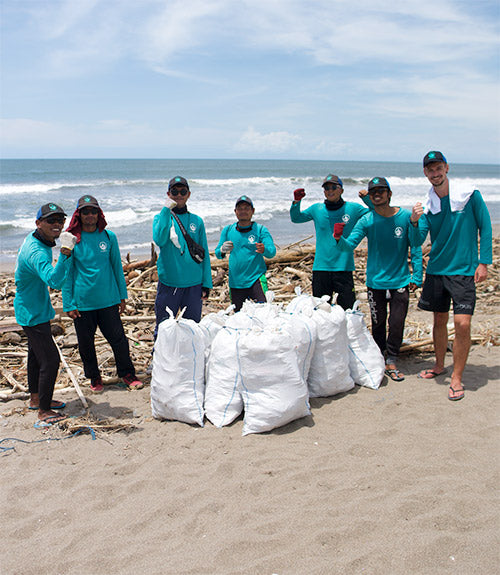
Our team – 11 employees in Medewi, Bali – is out every day. We conduct daily beach clean-ups, operate river barriers, teach in local schools, and recycle collected plastic on-site with Precious Plastic machines. To date, we have collected over 300,000 kg of ocean plastic. And we continue to do so.
The Indonesian Government
The government had set a goal to reduce plastic pollution by 70% by 2025. Unfortunately, this goal was not met. There has been progress – a provincial single-use plastic ban in Bali, awareness campaigns – but implementation remains patchy. Without the work of NGOs and local initiatives, the situation would be significantly worse.
Oceanmata in Medewi: Our daily work on site
Why Medewi in particular? Because Medewi is on the west coast – and therefore exactly where the plastic problem is worst. You can find out more about our work there in our article about Bali's mangroves and their protection.
What our team does every day:
Our 11-person team in Medewi works every day for cleaner beaches – with clean-ups, river barriers, school lessons and recycling. Read the full Medewi story →
Our core message? Plastic is not trash – it's a valuable resource. If we can embed this way of thinking, everything changes.
One customer summed it up perfectly: "I can't deal with so many things that need my help. When you buy something from you, it's so easy." And that's exactly how it should be. Easy to help, without it getting complicated.
What YOU can do – 5 concrete ways
Wondering how you can make a difference from Germany (or wherever you are)? Here are five ways that really make a difference:
1. Support projects that work locally
With an Oceanmata sponsorship, you can directly support our daily clean-up work. Every contribution goes towards beach clean-ups, river barriers, and school projects in Medewi.
2. Reduce your own plastic consumption
Sounds simple, and it is. Stainless steel water bottles, cloth bags for shopping, unpackaged stores – small changes with a big impact. Every piece of plastic that isn't produced can't end up in the ocean.
3. Travel consciously
If you travel to Bali: bring a reusable water bottle, forego straws, and choose accommodations that prioritize sustainability. And why not participate in a local clean-up?
4. Spread the Word 🐬
Share this article, tell friends about it, post it in your story. The more people who know the true extent, the more pressure there will be for real change. Our community of over 165,000 ocean heroes shows: Together, we are loud.
5. Shop consciously – and support the ocean with it
At Oceanmata, the proceeds from every product go directly to our work in Bali. Whether it's a sustainable phone case or an ocean bracelet – you actively contribute to less plastic ending up in the sea.
It's up to all of us
Bali has a massive plastic problem. There's no sugarcoating it. But Bali also has incredibly dedicated people – locals and expatriates – who fight against it every day.
With over 300,000 kg of collected ocean plastic, we at Oceanmata have shown that change is possible. But we are just getting started. Every day our team grows, every day more plastic is collected, every day more children in Medewi learn why the ocean needs to be protected. 🐢
And you can be part of it.
Be part of the solution 🌊
Over 165,000 ocean heroes are already on board. With every product, you support our work in Bali – daily clean-ups, river barriers and school projects in Medewi.
Discover bestsellers now