




🦈 Short Facts: Manta Rays
- Wingspan: up to 7 meters (Oceanic Manta Ray)
- Weight: up to 3,000 kg
- Lifespan: approx. 40 years
- Diet: Plankton, small crustaceans – pure filter feeders
- Threats: Plastic pollution, bycatch, targeted hunting
- Status: Vulnerable (IUCN Red List)
Manta Rays – Gentle Giants Our Oceans Need

Image credit: Photo by @afuafex
Anyone who has encountered a manta ray underwater will never forget that moment. With a wingspan of up to seven meters, they glide through the blue like living dragons – silently, gracefully, fascinatingly. Manta rays are among the most impressive creatures in our oceans, but their existence is severely threatened. Plastic pollution, bycatch in fishing nets, and targeted hunting are severely impacting these gentle giants. It's high time to learn more about them – and to act.
A Life in the Open Ocean 🌊
Manta rays are not deep-sea dwellers that hide in secret. They love the upper layers of tropical and subtropical seas, often near coral reefs and cleaning stations where smaller fish remove parasites from their skin. There are two species: the reef manta ray (Mobula alfredi) and the larger oceanic manta ray (Mobula birostris). The latter is a true globetrotter – it travels thousands of kilometers and occasionally dives to depths of over 1,000 meters.
Despite their imposing size, manta rays feed exclusively on tiny plankton and small crustaceans. With their mouths wide open, they crisscross the water, filtering out their food – a fascinating contrast between gigantic form and miniature prey. This type of feeding makes them an indispensable part of the marine ecosystem: they regulate plankton populations and are an important link in the food chain.
Under Pressure: The Biggest Threats to Manta Rays 🚨

What makes manta rays so particularly vulnerable is their slow reproduction. Females give birth to only one pup every two to three years. This means that if populations collapse, they recover very, very slowly. And the threats are real.
Plastic pollution is one of the biggest enemies. In areas with heavy marine pollution, manta rays get entangled in ghost nets or swallow microplastic particles with their filtered water. Studies by the WWF show that even remote reef areas are now contaminated with plastic waste – and manta rays simply have no way of distinguishing it from real nutrients.
Bycatch is another massive problem. Although manta rays are not allowed to be actively hunted, many end up in tuna and shrimp nets – often fatally. And in some parts of Southeast Asia, they are specifically caught for their gill plates, which are used in Traditional Chinese Medicine – although there is no scientific evidence for this.
What You Can Do – Concretely and Today 💪
The situation is serious, but not hopeless. Every decision in everyday life counts – and that's not an empty phrase.
- Reduce plastic consumption: Every piece of plastic you avoid cannot end up in the ocean. Reusable bottles, reusable bags, buying loose food – small steps with a big impact.
- Choose sustainable products: Support brands that actively combat ocean pollution. With a marine animal sponsorship with Oceanmata, you help directly – and with every purchase, 1 kg of plastic is collected from the ocean.
- Travel consciously: If you go diving or snorkeling: Keep your distance from manta rays, never touch them, and book with providers who take marine conservation seriously.
- Inform your environment: Share knowledge about these animals – because protection begins with understanding.
Manta Rays and Oceanmata – A Shared Mission 🐠
At Oceanmata, manta rays symbolize what we are fighting for: an ocean where animals like them can live safely – free from plastic, free from threat. That's why with every product sold, we collect 1 kg of plastic from the sea. Whether it's a sustainable iPhone case, an Ocean Plastic bracelet, or a marine animal sponsorship – you decide how much ocean you want to save.
Manta rays need clean oceans. And clean oceans need us.
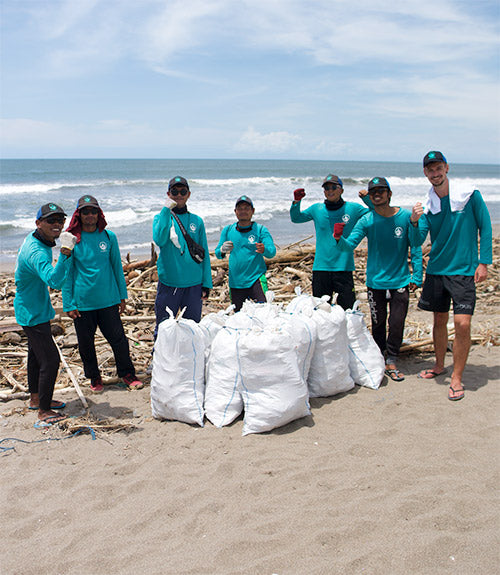
When Dominik quit his job as an engineer at Airbus in 2020 to found Oceanmata, he knew: The fight against ocean plastic begins with small steps. What started as an idea on a littered beach in Bali is now a team of 11 employees in Medewi, collecting plastic every day.
Save plastic from the ocean – with every purchase
Discover sustainable products made from Ocean Plastic and become part of the Oceanmata movement. For every purchase, we collect 1 kg of plastic from the sea – directly in Medewi, Bali. Discover bestsellers now →
Entdecke passende Oceanmata Produkte


