


March is coming, the days are getting longer, and in the back of your mind, a tingle begins: surf season. Whether you're in Biarritz, riding waves in Hossegor, or have your spot on the reef in Bali – every surfer feels it again in spring. The board gets waxed, the wetsuit unpacked, and the first session planned.
But let's be honest: As surfers, we're more than just wave hunters. We are guests of the ocean. And guests behave in a way that allows them to return.
Surfing and Ocean Protection – They Belong Together
You stand on the beach in the morning, the sun rises, the waves spread out smooth and clean before you. Then you see a plastic bottle floating in the water. Or a torn piece of fishing net on the shore. That instantly kills the vibe. And it happens every day, on every beach in the world.
Over 11 million tons of plastic end up in our oceans every year. That's roughly equivalent to dumping a garbage truck full of plastic into the sea every 60 seconds. Not sometime in the future, but now, at this very moment, as you read this sentence. The UNEP estimates that this number could triple by 2040 if we don't act.
Surfers are the first to notice. We paddle through stuff that doesn't belong in the water. We see corals bleaching. We notice when fish numbers decline. We feel changes in our own bodies when the water gets warmer than it should. Nanoplastics in the ocean are an issue that affects us all – even if you can't see them with the naked eye.
Therefore: Surfing and ocean protection are not two separate issues. They are one.

What You as a Surfer Can Actually Do
Enough with the problem description. Here are things you can really implement before heading out for your next session.
1. Beach Cleanups Before Surfing
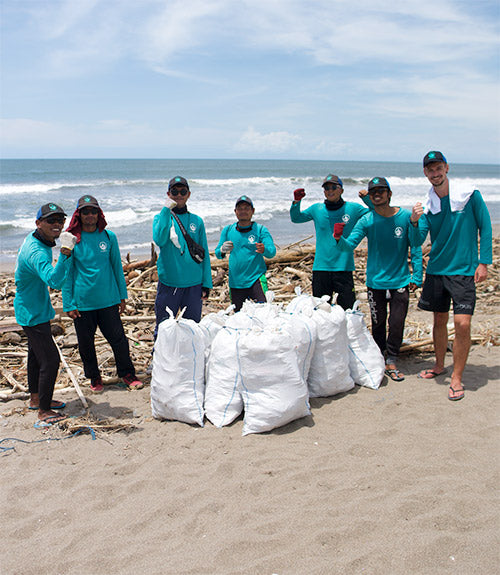
Sounds trivial? It's not. Spend ten minutes collecting on the beach before you go into the water. Take a bag with you, pick up the trash you notice. Our team in Medewi, Bali, does this every single day. They collect over 280,000 kilograms of ocean plastic per year – with hands, nets, and barriers that catch trash from rivers before it reaches the sea.
You don't have to fly to Bali to do this. Your local beach needs it just as much. Every plastic bag you pull from the sand is one less in the ocean.
2. Check Your Equipment
Surfboards are largely made of plastic. Leashes, wax combs, fins – all plastic products. Completely plastic-free surfing is not possible as long as the industry doesn't change. But you can start buying more consciously.
The same goes for everything you take to the beach. Sunscreen (make sure it's reef-friendly), water bottle (metal instead of plastic), snacks (no individual packaging). Small changes, big impact, if enough people do it.
3. Protect Your Phone – and Support the Ocean
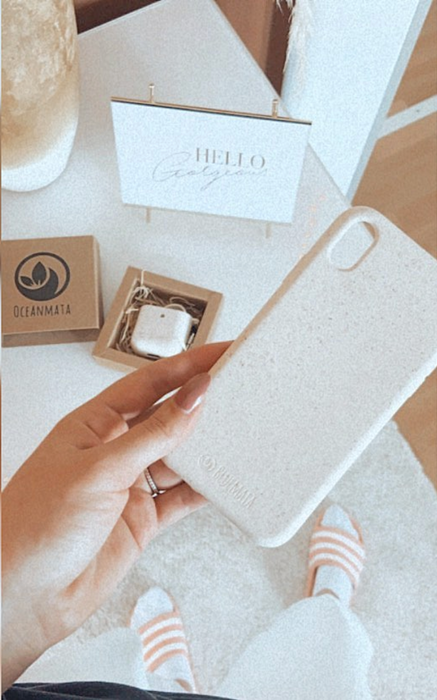
Yes, this sounds a bit like self-promotion. And it is, a little. But the logic holds: If you need a new phone case anyway, why not one made from recycled ocean plastic?
Every Oceanmata product removes one kilogram of plastic from the ocean. This is not a marketing gimmick; it's measurable. Our partner EcosystemImpact collects plastic directly on the beach in Medewi, Bali. It is sorted, shredded, and processed into pellets. From these pellets, we create phone cases, bracelets, and necklaces.
Over 100,000 customers have participated so far. That's over 100,000 kilograms less plastic in the ocean. Not a miracle cure, but a concrete contribution.
4. Reef-Friendly Sunscreen
This is where it gets really important. Regular sunscreen contains oxybenzone and octinoxate. These substances bleach corals. A single drop in six Olympic swimming pools is enough to harm corals. And you slather yourself with it before every session.
Switch to mineral sunscreen with zinc oxide or titanium dioxide. It costs a little more but protects your spot. And the corals that create waves by forming the reefs you surf on.
5. Share Knowledge
When you surf with friends, tell them about your beach cleanup. Show them your ocean plastic case. Explain why reef-friendly sunscreen is important. Surfers listen to surfers. Not to lectures from people who never get in the water.
Surfing in Bali: Where Oceanmata All Began
Those familiar with Oceanmata know: It all started with a surf trip. In 2020, Dominik, the founder, was in Medewi on the west coast of Bali. Medewi is known for its long, consistent left-hand point break. Perfect for longboarding. But when he arrived at the beach, there was plastic everywhere.
Not just a little. Everywhere. Between the rocks, in the sand, in the water. The contrast between the ocean's beauty and the trash on its shores never left him. From this experience, Oceanmata was born: the idea of seeing plastic not as waste, but as a raw material.
Today, eleven people in Medewi work every day to remove plastic from the sea. They operate river barriers that stop plastic from reaching the open water. They conduct school lessons so children understand why littering the sea is harmful. And they provide free trash cans because there simply aren't any on many beaches in Southeast Asia.
The 2026 Surf Season – Your Checklist
Before you start the first session of the year, here are a few things worth doing:
- Check your board: Dings, fins, leash – is everything still watertight?
- Inspect your wetsuit: Tears? Repair instead of buying new.
- Assemble your beach kit: Reusable water bottle, cloth bag, gloves for cleanup.
- Change sunscreen: Mineral, reef-friendly, no oxybenzone.
- Spot check: How does your home beach look right now? Does it need a cleanup?
Why Surfing and Ocean Protection Belong Together – The Science
Surfers are not just beneficiaries of the ocean; they are also its eyes and ears. A study by the University of Plymouth found that surfers swallow an average of ten milliliters of seawater per session. Sounds little, but it contains an average of microplastic particles. So we are literally part of the problem if we don't do something about it.
At the same time, surfers are one of the most active groups when it comes to coastal protection. Surfrider Foundation, Surfers Against Sewage, Sustainable Surf – major ocean conservation organizations were founded by surfers. Because we are the first to feel it when something is wrong. The water is warmer, currents change, biodiversity decreases. We are in the thick of it.
Microplastics and the Surfer's Body
You probably think: Plastic in the ocean is a problem for fish and turtles. True. But it's also your problem. Every time you go into the water, you come into contact with microplastics. Through the skin, by inhaling spray, by swallowing water. There are still few long-term studies on this, but the direction is clear: The more plastic in the sea, the more plastic in us.
That's why it makes sense to surf not only for the ocean but also for yourself. Less plastic on the beach means less plastic in the water means less plastic in your body. Simple equation.
From Surfer to Ocean Guardian
You don't have to turn your life upside down. Start small. One bag of trash per session. A more sustainable purchasing decision. A conversation with a surf buddy about reef-friendly sunscreen. It adds up.
At Oceanmata, we don't believe in perfection. We believe in consistent steps. Our entire team surfs. We know that a phone case won't save the ocean. But 100,000 phone cases made from ocean plastic mean 100,000 kilograms less trash in the sea. And that's a start to build on.
A Surfer's Quote That Blew Me Away
"I've been surfing for 15 years. I used to only have to wash my board after a session. Now I have to pick trash out of my wetsuit before I drive home."
A customer wrote this to us. She's been buying our cases for three years and sends us a photo of the beach cleanup she does before her session every time. No big deal, no Instagram story, just ten minutes of collecting trash. Every time.
What Does a Phone Case Have to Do with Surf Season?
Nothing. And everything at the same time. It's not about the case. It's about making a choice with every purchase: Do I support a system that produces and disposes of plastic? Or one that removes plastic from the ocean and gives it a second life?
Our turtle sponsorships go a step further. For every sponsorship, we fund specific marine conservation projects. You get photos of your turtle, updates from Bali, and the good feeling that your money is going where it's needed.
And if you're checking if your iPhone still has the right case: Check out our iPhone 17 Pro Max cases. Made from Ocean Plastic, made in Medewi, made with purpose.
The Ocean Gives Us Waves. What Do We Give Back?
I'm not saying you should now sort trash barefoot on the beach. I'm also not saying a phone case will stop climate change. What I am saying is: Every session is an opportunity. To leave the beach a little cleaner than you found it. To buy more consciously. To show respect for your spot.
The 2026 surf season is upon us. Let it be the one where we not only stand on the board, but also behind it.
You can find more information about our project in Bali on our project page. And all products made from Ocean Plastic are available in the Oceanmata Shop.
Ready for the season? Check out our bestsellers and support our ocean cleanup in Medewi, Bali, with every purchase. 1 product = 1 kg less plastic in the ocean. 🌊🐢
Entdecke passende Oceanmata Produkte


